


Innovating Experience Innovation
In conversation with:
Chris Moore, CEO
Brian Ryckman, Partner + Director of Planning
Whitney Summers, Associate + Senior Marketing Manager
DTJ’s leadership team discusses why Experience Innovation creates a rare space for honest dialogue, what makes it different from traditional conferences, and how it’s reshaping relationships between public and private sectors.
1. Experience Innovation fills a gap in the industry
When you ask someone to dedicate an entire day to an event, you’re making a significant ask. So what makes Experience Innovation worth it?
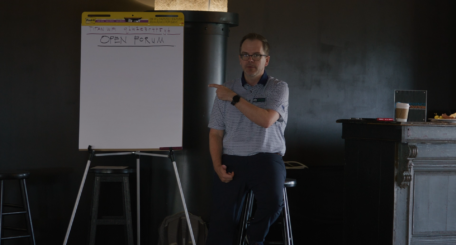
CM: People either go to conferences where they get spoken to—told what’s happening and what to think in a huge group setting—or they’re buried in daily project meetings dealing with the practicality of their specific projects. There’s no offering that allows them, in a small group of about 20 people, to have a dialogue about projects that relate to them but aren’t their own. It frees them up to think about opportunities and things that could change.
BR: You have to do this very intentionally. Going in, you think: there’s something coming out of it, and it’s probably not just networking. Hearing from perspectives that we don’t typically get to hear from is one of the things we hear about why participants come. You’ve got to get people to interact in a way that you can’t do through a TED talk or a market report. What’s the point of gathering people otherwise?
“You’ve got to get people to interact in a way that you can’t do through a TED talk or a market report. What’s the point of gathering people otherwise?”
– Brian Ryckman
2. Removing real stakes transforms public-private sector dynamics
But creating that dialogue space is only half the battle. The real challenge is getting people to let their guard down, especially when you’re bringing together parties who are typically adversaries.
 BR: When a developer and a municipality come together, it’s because there’s a project at stake with real financial implications. They’re already coming to the table with their guard up. The relationship you enter that room with is already disadvantageous to being productive. You’ve got to strip away the context of something being real and it almost becomes an exercise. People are much more willing to speak freely. On the public sector side, they feel empowered to do what they would do without constraints—they don’t have to be beholden to a city manager or planning commission. They can just say, “Here are my thoughts if I were in charge of the world.”
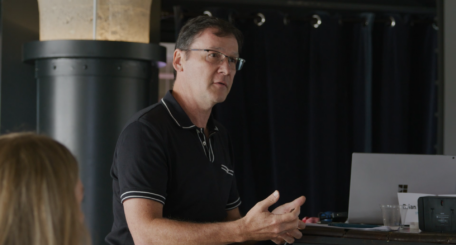
CM: What I’ve seen is the same realization from different people, leading to a better understanding of what goals each side has. Many times the goals are the same, they just go about it differently. The light bulb goes off and they realize that they are working together towards the same goal. For real projects, the money isn’t patient. The money expects a return in a specific amount of time, and the messiness occurs when that process is unknown and gets lengthened.
WS: Something that Chris establishes very early on happens quickly—everyone gets comfortable because we’ve established it as a safe space. You don’t make progress when everyone feels uncomfortable. You make progress when you address challenges and when it is comfortable. Those conversations require that level of honesty.
“You don’t make progress when everyone feels uncomfortable. You make progress when you address challenges and when it is comfortable.”
– Whitney Summers
3. Safe spaces don’t mean immediate openness—trust builds over the day

Establishing that safe space creates the conditions for openness, but it doesn’t guarantee it. There’s a visible transformation that unfolds throughout the day as trust gradually replaces caution.
BR: What you’ll notice over the course of a day is it starts out quiet. They’re still tiptoeing around maybe a more bold point that they want to make. By the end of the day, they’ve spent enough time with that person and feel comfortable enough where they’re actually going to speak their mind more freely.
CM: When somebody says something that I think is at odds with the other side, I will probe a little bit more to try to get them to say something if they’re not willing to speak immediately. Everybody in the room is very professional and respectful—they don’t always feel like they have the platform to say what they need to say. So it’s really my job to pull it out of them.
4. Real-time interaction compresses months of work into hours
That careful facilitation is crucial because the format itself is what sets Experience Innovation apart from every other industry event.
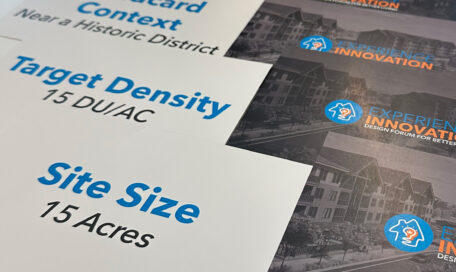 BR: Most of these folks don’t get to get into the interactive space on their projects as much as they want. The way Chris facilitates allows them to experience something that’s somewhat familiar—it’s a development premise—but in a way they frankly don’t ever do in a practical setting. By saying “let’s forget how this would actually happen and just get playful with it,” and allowing themselves to be vulnerable and get silly with it at times, it sparks a new way of thinking.
CM: From a design standpoint, there’s no substitute for real-time interaction. We can spend a day in a workshop and basically do months worth of work because we’re getting real-time feedback, answers, and making decisions, not “let’s work on something for a week, send it out, hope we hit the mark, get feedback, make edits.” All that happens in a few hours versus weeks. People realize they’re giving as much as they’re getting, which doesn’t happen in bigger forums.
“When people hear that information was shared in a think tank or summit, their ears perk up. It puts more stock in it than just ‘you had this idea that happened.”
– Chris Moore
WS: That real-time, hands-on aspect is exactly what sets us apart from other firms. It’s not just theory or lecture—it’s collaborative problem-solving in the moment. That’s the DTJ approach, and Experience Innovation showcases that beautifully.
5. Experience Innovation demonstrates how DTJ thinks and works
And that showcase is intentional. Beyond the immediate value for participants, the event serves a larger purpose for the firm.
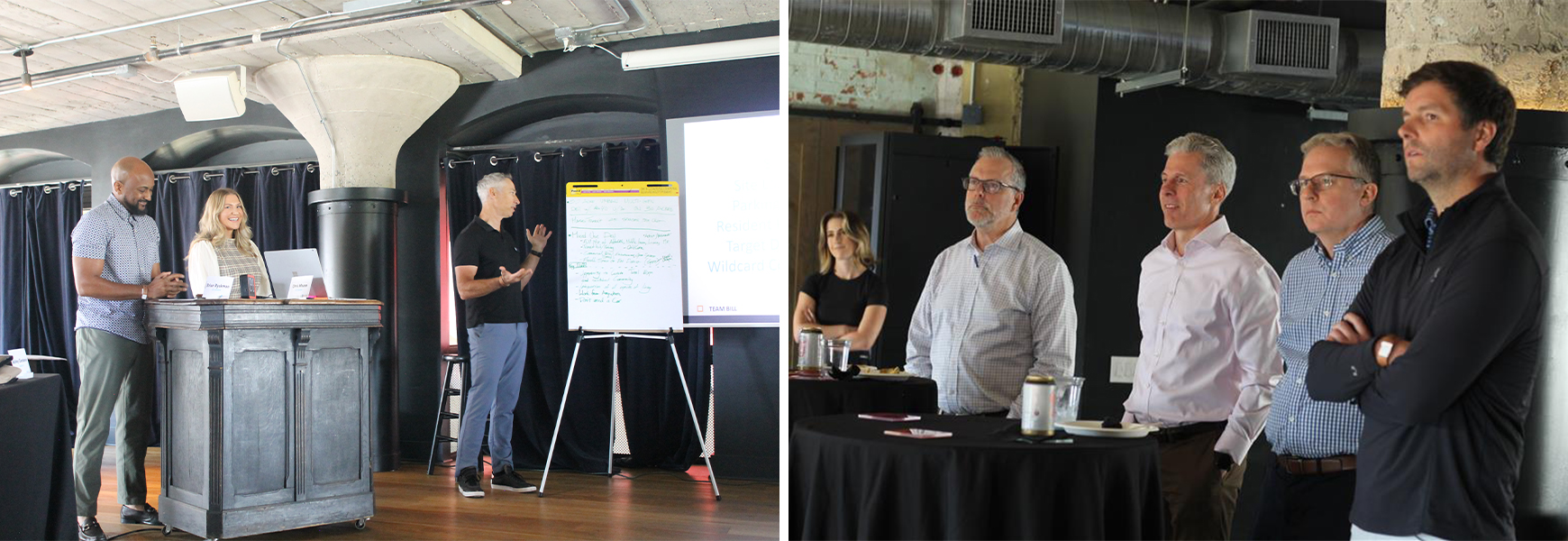
CM: Putting together the agenda is an important way to demonstrate how DTJ works, how we think about things, and hopefully in a way that’s different from a lot of other design firms that are more formula-driven. We work hard to balance it. We want to have fun and be impactful with great takeaways, but we don’t want it to be like a classroom either.
WS: It’s not just about promoting the Experience Innovation concept itself. It’s how we take that and weave it into the broader messaging of the firm. This is our opportunity to give clients insight into what it’s like working with us. It’s a high commitment in terms of taking a full day, but it’s a very low commitment when it comes to the grand picture of how much a project’s going to cost them.
6. Cross-market perspectives spark ideas you wouldn’t discover locally
The diverse group of participants—from different markets, different roles, different perspectives—creates another layer of value that keeps people coming back.
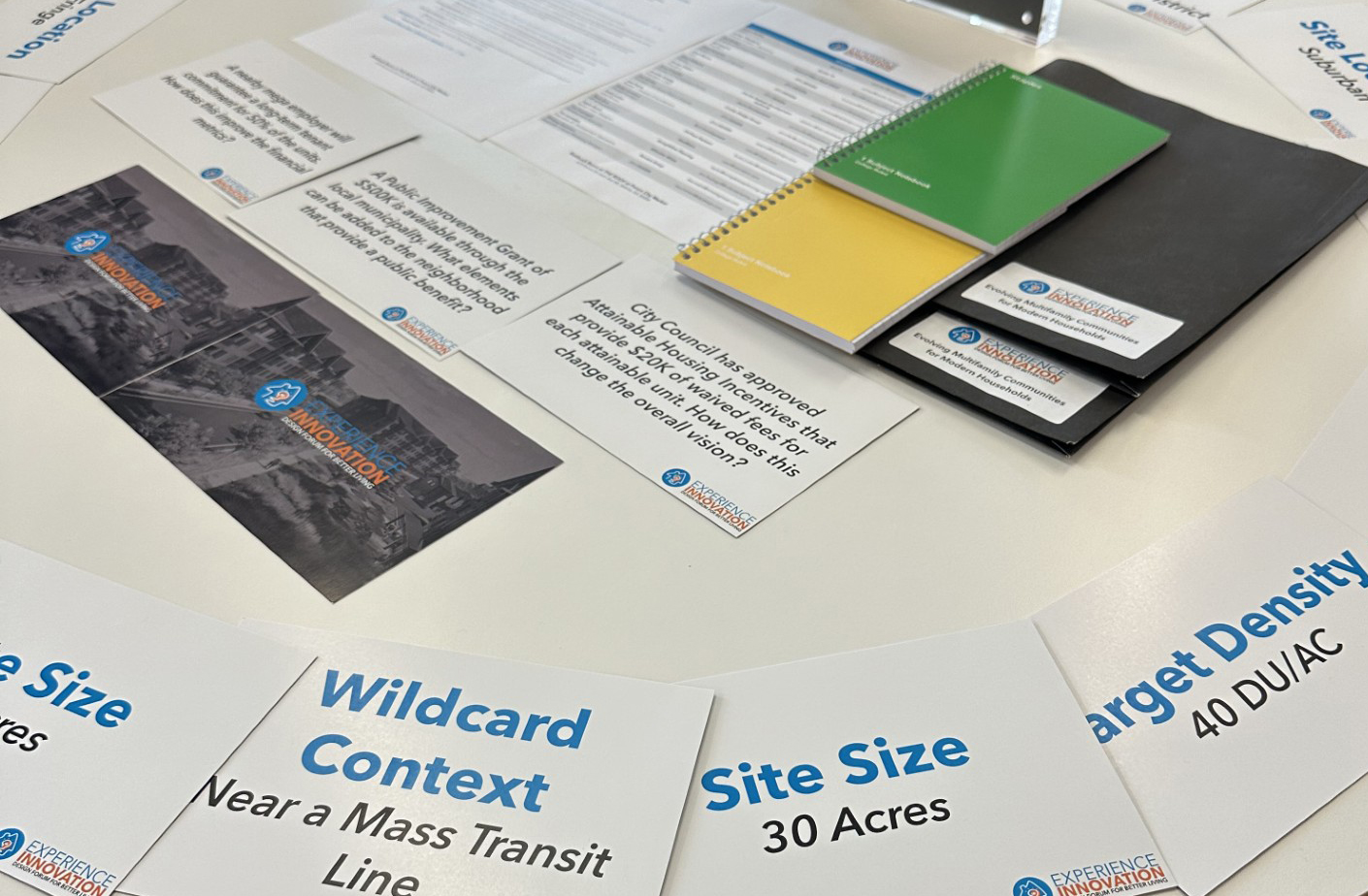
BR: If you bring a developer from across the country sharing a project story, there’s going to be inevitably points where you go, “Wow, for whatever reason, the city of XX has never thought about this.” That’s interesting to think about—how would I apply that experience to our jurisdiction? It’s like reading a book. If you only read books from the same author, at a certain point you know what they write about. Then you read an author that does something very different and you’re like, “Wow, very different storytelling method.”
7. The next evolution is sustaining connections beyond
With three events under their belt and a fourth in planning, the team is focused on maximizing the impact beyond the day itself.
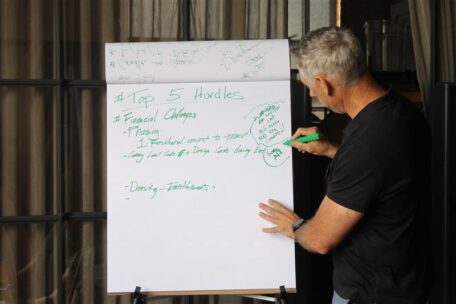
BR: What I look forward to is learning more about things that I’m not familiar with. It gives me the information and confidence to interact with our clientele in a way I’d like to be able to do more consistently. I want to know what’s important to them because that will tell me what we need to be familiar with.
Experience Innovation’s commitment to creating that rare space where honest dialogue can happen, guards can come down, and real progress can be made continues to evolve. As we plan the next event, one thing remains constant: the belief that bringing the right people together in the right way can unlock insights that simply don’t happen anywhere else.
See you in 2026! In the meantime, follow us on LinkedIn for live updates and subscribe to our email list.

 BACK TO BLOG